Award-winning technology backed by ground-breaking research
seL4 is both the world's most highly assured and the world's fastest operating system kernel. Its uniqueness lies in the formal mathematical proof that it behaves exactly as specified, enforcing strong security boundaries for applications running on top of it while maintaining the high performance that deployed systems need.
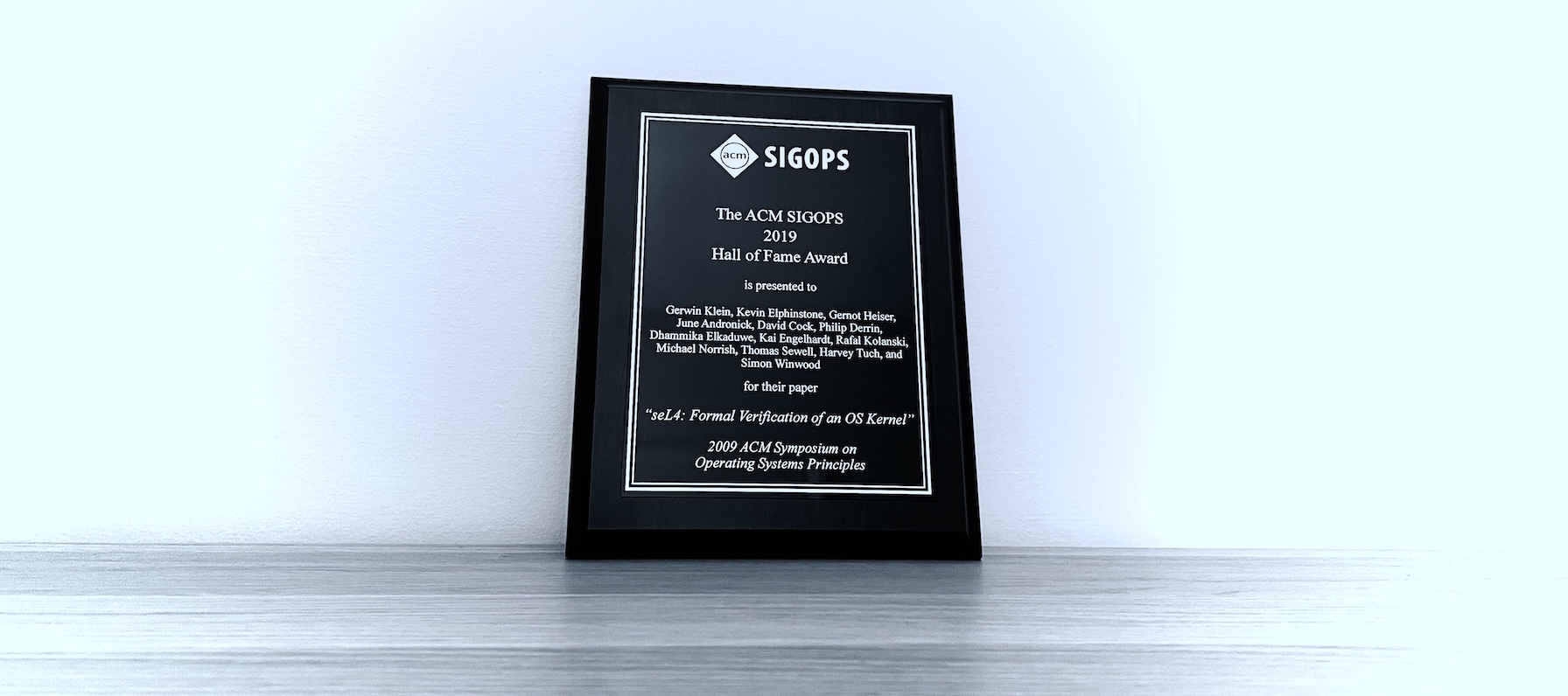
seL4 is grounded in research breakthroughs across multiple science disciplines. These breakthroughs have been recognised by international acclaimed awards, from the MIT Technology Review Award, to the ACM Hall of Fame Award, the ACM Software Systems Award, the DARPA Game changer award, and more.
Protecting critical systems around the globe
seL4 protects critical systems from software failures and cyber-attacks. It allows non-critical functionality to run securely alongside critical payloads by enforcing strong isolation and controlled communication.
seL4 is used in a wide range of critical sectors, from automotive, aerospace and IoT to data distribution, military and intelligence. It has been successfully retrofitted into complex critical systems and has demonstrably prevented cyber-attacks. Government organisations on several continents have funded further development of seL4 and its ecosystem.

Supported by commercial service providers
seL4 is the leading choice for building highly reliable software. Commercial support is available to help you build or migrate your product to run on seL4 and benefit from its unparalleled security.
A number of Trusted Service Providers have been endorsed by the seL4 Foundation for their expertise and experience in systems and/or formal verification at various levels: kernel, kernel platform ports, user-level Operating Systems components, and applications.
Backed by an Open Source Foundation
seL4 is open source, supported by the seL4 Foundation, an open, transparent and neutral organisation. The seL4 Foundation's goal is to ensure that seL4 continues to be the most highly-assured operating-system technology, readily deployable with a diverse and stable ecosystem of supporting services and products.
seL4 is free to use; its maintenance and development cost are funded by the seL4 Foundation memberships.

Contributions from a strong ecosystem
seL4 and its related technologies receive contributions from developers around the world.
The microkernel code itself evolves through a tightly controlled process, safeguarded by the Foundation's Technical bodies, to preserve its security, high assurance, and mathematical proofs.
Frameworks, tools and components that run on top of seL4 can use seL4's formally verified protection mechanisms and are therefore easier to assess for correctness. This means they can evolve more rapidly and accept community contributions at a higher pace, increasing the ease of adoption of seL4.
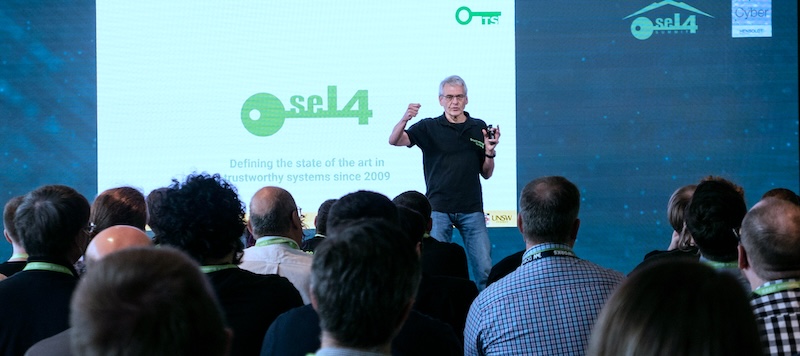
Annual gathering at the seL4 Summit
The seL4 Summit is the annual international conference on the seL4 microkernel and all seL4-related technology, tools, infrastructure, products, projects, and people.
It brings together the entire seL4 community to learn about the seL4 technology, its latest advances, uses, successes, challenges and plans. The event showcases exciting seL4 development, research, real world applications and experiences, offering an opportunity to connect with other seL4 developers, users, providers, customers, supporters, potential partners and enthusiasts.

Development Roadmap
With an active, public development roadmap, seL4 continues to solidify its position as the leading secure operating system and the industry standard for verified software. Evolution drives every level of the seL4 ecosystem:
seL4 itself is expanding its support for an increasing range of platforms, architectures, configurations and features.
The ecosystem is expanding with the development of frameworks, tools, components and language support to facilitate the production of seL4-based systems.
The formal proofs, which make seL4 unique, evolve alongside seL4. They are constantly maintained, improved, and kept in lock-step with the seL4 code.
Documentation and learning material
Eager to learn how to use and build on seL4 or its related frameworks and tools like Microkit, CAmkES, and Rust language support?
Explore the wide range of learning material for seL4, from hands-on tutorials and comprehensive documentation to research articles and university courses.

Latest News
-
The seL4 Foundation is pleased to welcome the Australian National University (ANU) as an Associate Member. ANU's School of Computing has a longstanding connection to seL4, and ANU researchers have contributed to seL4's original verification efforts and DARPA's HACMS program.
This research contribution continues to grow through a broader concentration of formal methods and programming-languages expertise at ANU. Current work involves the development of programming languages for use with the seL4 Microkit.
The membership strengthens active collaborations between ANU's School of Computing and fellow Australian-based member organisations on the development of secure technology based on the seL4 ecosystem.
-
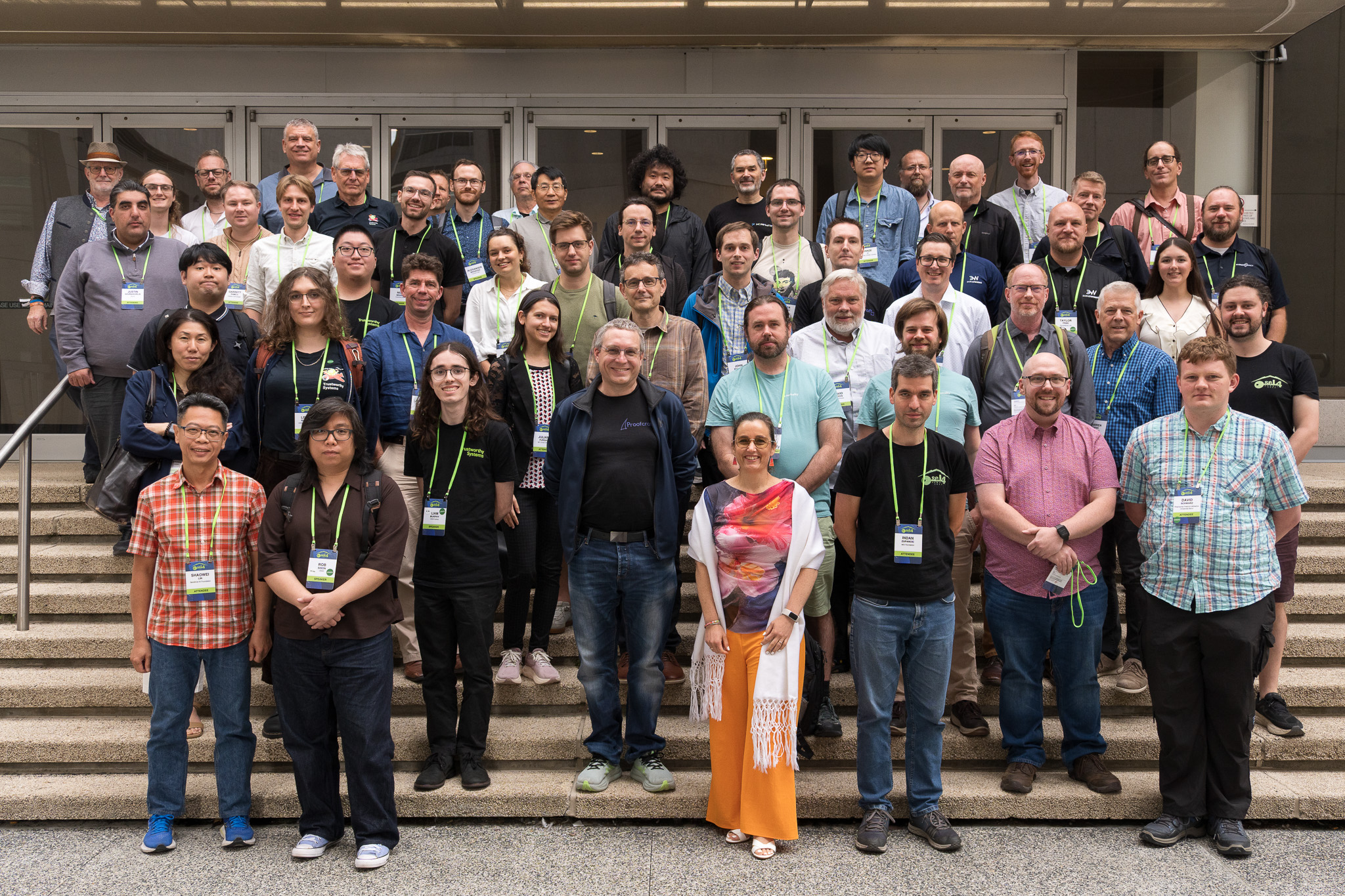
Videos of the seL4 Summit 2026 are now available on the seL4 YouTube channel! Links, slides, and posters can be found on the summit Program and Abstracts pages. Thanks to all the speakers for making the seL4 Summit 2026 a great success!
-
24 Aug 2026
The verification of seL4 on the 64-bit Arm architecture has reached another milestone. After completing the proofs of functional correctness and integrity, Proofcraft has now established the proof that seL4 enforces confidentiality on AArch64, providing a formal mathematical proof that the kernel prevents an application running on top of seL4 from learning information without authorisation.
This milestone completes the formal proof that the seL4 implementation code on AArch64 enforces security isolation of the applications running on top (under the assumptions listed here). This isolation prevents attacks on non-critical applications from propagating to critical applications and compromising them.